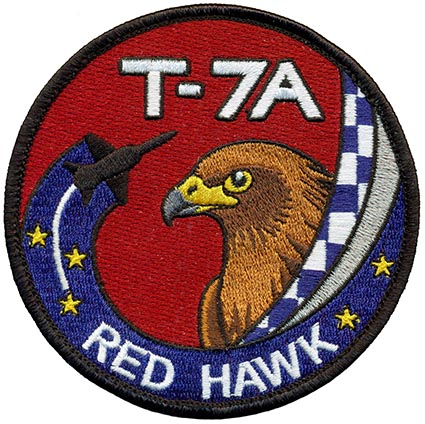
Description
Computer made/mounted on velcro 4.0 inch-100mm
BOEING T-7A RED HAWK
The T-7A Red Hawk is the Air Force’s next-generation advanced pilot training aircraft.
It is designed to replace the aging T-38C Talon and prepare pilots and weapon
systems officers for 4th, 5th, and future 6th generation fighter and bomber aircraft.
The T-7A, along with its Ground Based Training System (GBTS), provides a safer,
more robust, and more sustainable training platform to meet national defense pilot
production requirements.
Features.
The T-7A features modern blended wings, a high-visibility canopy, and a streamlined
fuselage optimized for stability and high-G maneuvering. A digital fly-by-wire control
system delivers precise handling and responsiveness, while maintenance-driven
design places key components at accessible heights, reducing downtime and
improving serviceability across the aircraft.
The T-7A incorporates an advanced “glass cockpit” with a large-area digital display,
reconfigurable avionics, and an integrated head-up display designed to replicate 5thgeneration fighter environments. The aircraft supports embedded training, enabling
simulated threats, weapons, and advanced flight scenarios without external pods.
The T-7A delivers powerful thrust through its GE F404 engine, providing rapid
acceleration, shorter takeoff distances, and improved climb rates over legacy
trainers. The aircraft’s open-architecture systems allow rapid software updates and
capability growth, supporting evolving Air Force training needs.
The student and instructor sit in a fully digitalized cockpit environment equipped with
modern ejection seats. The ergonomic layout, enhanced visibility, and updated life support systems create a safer and more intuitive training platform aircrew.
The student and instructor sit in a fully digitalized cockpit environment equipped
with modern ejection seats. The ergonomic layout, enhanced visibility, and updated
life-support systems create a safer and more intuitive training platform aircrew.
Background
The Red Hawk was selected in September 2018 under the T‑X Program to replace
the long-serving T-38 Talon as the United States Air Force’s advanced jet trainer.
On 14 September 2023, the USAF began developmental testing the Red Hawk at
Edwards, Air Force Base, CA.
As of 2025, the program remains in pre-operational status: delivery of serialproduction Red Hawks has begun, with “Initial Operating Capability” (IOC) scheduled
for summer of 2027.
The name “Red Hawk” honors the legacy of the WWII Tuskegee Airmen, evoking the
red-tailed paint scheme associated with their historic aircraft. Similarly, the first
AETC squadron to receive the T-7A is the 99th Flying Training Squadron which
traces its heritage to the 99th Pursuit Squadron, the first squadron of the Tuskegee
Airmen.
In addition to the aircraft, the Red Hawk Program has a full training system including
ground-based simulators and associated support equipment — everything needed
to train future fighter and bomber pilots in both live and simulated environments.
Because it was designed from the ground up as a modern, digital-era jet trainer, T-7A
brings capabilities that will prepare students for many aspects of frontline 4th- and
5th-generation fighters — including simulated air-to-air / air-to-ground training, highG and high-angle-of-attack maneuvering, night operations and embedded mission
systems.
Once fully fielded, the T-7A training system is intended to produce the next
generation of fighter and bomber pilots, as well as weapons system operators —
providing a modern, cost-effective, safe and high-fidelity bridge between initial
training and advanced combat aircraft.
General Characteristics:
Primary Function: Advanced jet pilot trainer
Builder: Boeing / Saab
Power Plant: One General Electric F404-GE-103 afterburning turbofan
Thrust: 12,000 lbs (mil power)
Thrust (max): 17,600–18,000 lbs (afterburner)
Length: 46 ft
Height: 13.7 ft
Wingspan: 30.6 ft
Speed: 550KCAS / Mach .95
Ceiling: 31,000 ft
Gross Weight: 21,000 lbs
Range: 990 nmi
Armament: None (weapons simulated via embedded training)
Unit Cost: $19,000,000 (2025 USD)
Crew: Two, student and instructor
Date Deployed: 5 December 2025
Planned Inventory: Active force, 351; ANG, 0; Reserve, 0